


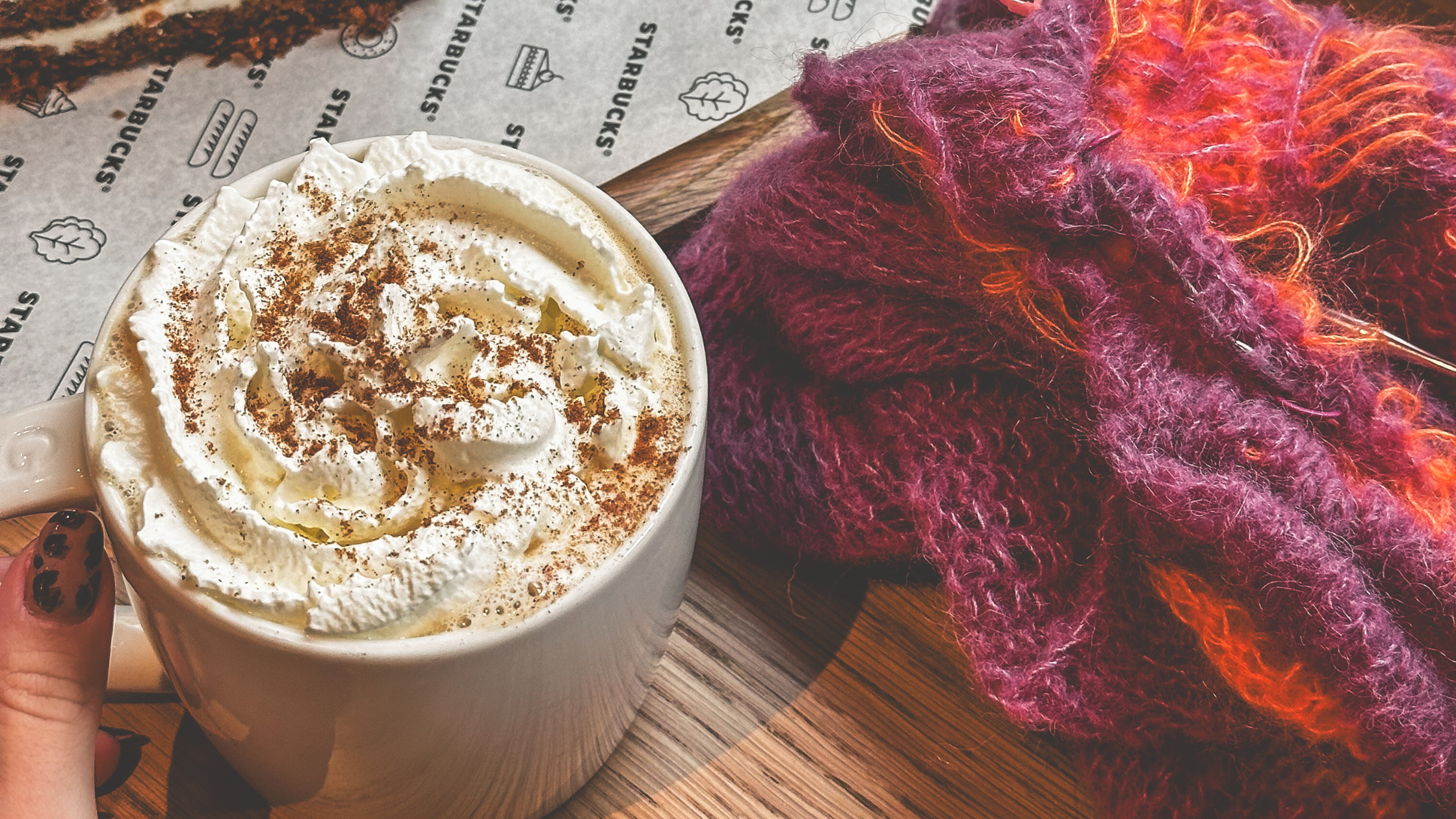
Good morning! Autumn is starting, and with it, the perfect time to dive into the warm, cozy world of handicrafts. More and more people are picking up crochet hooks or knitting needles, looking for relaxation and the satisfaction of creating something of their own.
But where to start? The internet is full of "perfect" starter kits and conflicting advice. Today, I approaching the topic differently. Based on experience, we’re hinting at how to start wisely, without frustration and unnecessary expenses.
🛍️ First purchases: The Myth of "Perfect" Equipment
You walk into a store and see dozens of hooks: metal, wooden, with an ergonomic silicone handle... Which is best for beginners?
The answer is: it depends.
There is no such thing as the "perfect starter hook." What is comfortable for some (e.g., smooth metal) might be too slippery for others.
My advice: Instead of buying a whole set right away, start with one or two sizes. If you have the chance, test different materials. Many people find that hooks with a silicone handle are the most comfortable in the long run, but your hands might prefer the coolness of metal or the warmth of wood.
🧶 The Most Important Decision: Choosing Your First Yarn
This is the absolutely crucial point that determines success or failure at the start. Choosing the yarn is more important than choosing the hook.
🚫 Mistake #1: What absolutely NOT to buy at the start
You might be tempted, but avoid like the plague:
-
Plush/Textured Yarns: Yes, they are cute and soft (like the ones for popular amigurumi), but they are the worst choice for learning. Why? Because you absolutely cannot see the stitches in their texture. You won't know where to insert the hook.
-
Dark Colored Yarns: Black, navy blue, or dark brown are a nightmare for beginners. On dark yarn, it is also very difficult to count and distinguish stitches.
✅ What to choose? The "See Everything" Rule
To make learning a pleasure, your first yarn should be:
-
Thicker: Working with thicker yarn on a larger hook (or needles), you see the effects of your work instantly. It's incredibly motivating!
-
Smooth: Classic, smooth cotton yarn or a cotton-acrylic blend works best.
-
Light: Choose beige, light pink, light blue, or white. On light colors, you will see the structure of every double crochet and single crochet perfectly.
🎓 How to learn? The Revolutionary Method: Start with a Project
Most guides suggest that you first memorize how to do single crochets, double crochets, knit stitches, and purl stitches.
We disagree. That’s boring and ineffective.
My recommendation (The "Small Project" Method):
Find a simple video tutorial online for something you like and want to have. It could be a coaster, a simple beanie, a body washcloth, or a small doily.
Check what materials that specific tutorial requires (what hook/needle size, what yarn).
Buy only those materials.
Start the video and do it step-by-step along with the creator.
Thanks to this, you learn specific techniques in practice. Even if you forget how to do a single crochet in a week – it doesn't matter. You can always go back to the tutorial. And most importantly – at the end of learning, you are left with a finished, tangible product, not just a useless swatch.
🧘♀️ Peace of Mind: Mistakes Everyone Makes (And That’s OK!)
Handicraft is a process. Certain mistakes are unavoidable and, interestingly, even people with years of experience make them. You have to be ready for this.
Mistake 1: Uneven Thread Tension
Your first project (and maybe even a sweater!) will probably be tight in one place and loose in another. This is ABSOLUTELY NORMAL.
Keeping even yarn tension is a matter of muscle memory. Your hands just have to learn it through practice. You can't avoid this at the beginning.
Mistake 2: Losing and Adding Stitches
You start with 20 stitches, and halfway through the work, you suddenly have 18 or 22? Welcome to the club! Counting stitches is the bane of every crafter.
Don't stress about it. If something doesn't add up, simply unravel (yes, ripping out is a normal part of the process) the last row and do it again, counting more carefully.
Mistake 3: Pressure for Perfection
Your first coaster won't be perfectly round. Your first scarf might have holes. And you know what? That's wonderful! It's proof that you are learning. Cut yourself some slack and enjoy the process, not just the perfect end result.
✅ Your Minimalist Shopping List for the Start
You don't have to spend a fortune. To start learning with the "Small Project" method, you only need:
-
One crochet hook OR one pair of knitting needles in the size required by the tutorial.
-
One skein of yarn (remember: light, smooth, and rather thick!).
-
Scissors (you definitely have these at home).
-
A tapestry needle (with a large eye, for weaving in ends).
-
A measuring tape (optional, depends on the project).
That's all. With such a kit, you can start your adventure today.
The most important advice for the start? Just start. Choose a project that makes you want to create, stock up on the right (light and smooth!) yarn, and give yourself time to learn. Good luck!
And you, what project do you want to start with? Browse my patterns!